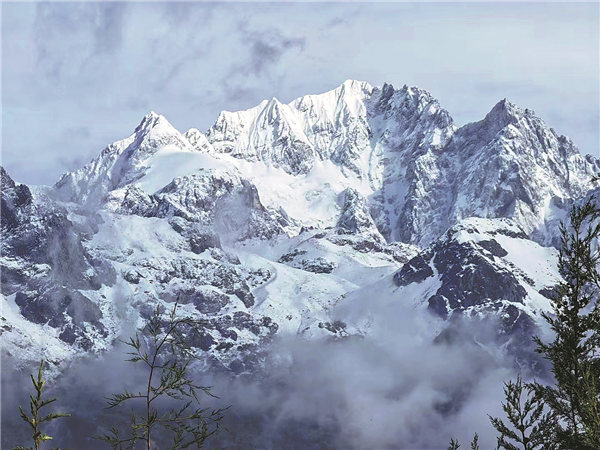
Yulong Snow Mountain
Overview
Yulong Snow Mountain, located in Yulong Naxi autonomous county in Southwest China's Yunnan province, represents one of the most captivating natural landscapes in the region. Its breathtaking scenery and rich cultural significance have made it a key attraction for tourists, contributing to the economic and cultural exchange within the region.
Geography
Located between 100°04'–100°16' east longitude and 27°03'–27°40' north latitude, Yulong Snow Mountain is one of the biggest snow mountains of the northern hemisphere, with the highest peak at an altitude of 5,596 meters. Stretching over 35 kilometers (22 miles) in length and 20 kilometers (13 miles) in width, it is a stunning natural wonder.
Climate
The climate of Yulong Snow Mountain is predominantly alpine, with a clear distinction of seasons. The high altitude results in lower temperatures, and the weather can be quite unpredictable, with sudden changes that include intense sunlight, heavy rainfall, and strong winds. The upper parts of the mountain are covered in snow year-round, while the lower areas experience milder weather conditions. The climate plays a crucial role in the ecological diversity of the mountain, supporting various plant species adapted to different altitudes and weather conditions. The unique climate also influences human activities, including tourism and conservation efforts.
Tourist Attractions and Activities
Yulong Snow Mountain offers a plethora of attractions and activities for visitors. Among the most popular is the Glacier Park, which provides stunning views of the glaciers and the surrounding landscapes. Tourists can also explore the scenic Lanyue (Blue Moon) Valley, known for its picturesque scenery. The area is rich in biodiversity, offering opportunities for nature walks, photography, and bird watching.
Cultural Significance
Yulong Snow Mountain holds a deep cultural significance for the Naxi people, one of China's ethnic groups. The mountain is not only a natural wonder but also a symbol of cultural heritage and identity. The Naxi people have lived in harmony with the mountain for centuries, developing a unique culture that includes traditional music, dance, and the use of the Dongba script, one of the world's oldest pictographic scripts. The mountain's influence is evident in local customs, religious practices, and folklore. Visitors to the region can experience this cultural richness through interactions with the Naxi community, exploring ancient villages, and participating in cultural festivals and events.
Environmental Challenges and Conservation
Despite its natural beauty and cultural importance, Yulong Snow Mountain faces environmental challenges. The increasing number of tourists poses a threat to the mountain's fragile ecosystems, with concerns about pollution, waste management, and habitat degradation. Conservation efforts are essential to address these challenges, requiring collaboration between local authorities, environmental organizations, and the tourism industry. Sustainable practices, such as controlled visitor numbers, environmental education, and responsible waste management, are critical to preserving the mountain's natural and cultural heritage for future generations. Article reference1. Mountain cleaners answer a higher calling. en.chinaculture.org. 20242. Yuhu village, where Naxi culture meets snow mountain beauty. en.chinaculture.org. 20233. Amazing scenery of Yulong Snow Mountain in winter. chinadaily.com.cn. 2018Photo Gallery(14 pictures)CategoriesTourismTagCity TourismNatural WonderIce and Snow TourismRelatedLugu LakeOld Town of LijiangCatalogue1. Overview2. Tourist Attractions and Activities3. Cultural Significance4. Environmental Challenges and Conservation- - - []








